Why the theme The Middle Ages makes a good book
An adventure that suits the child
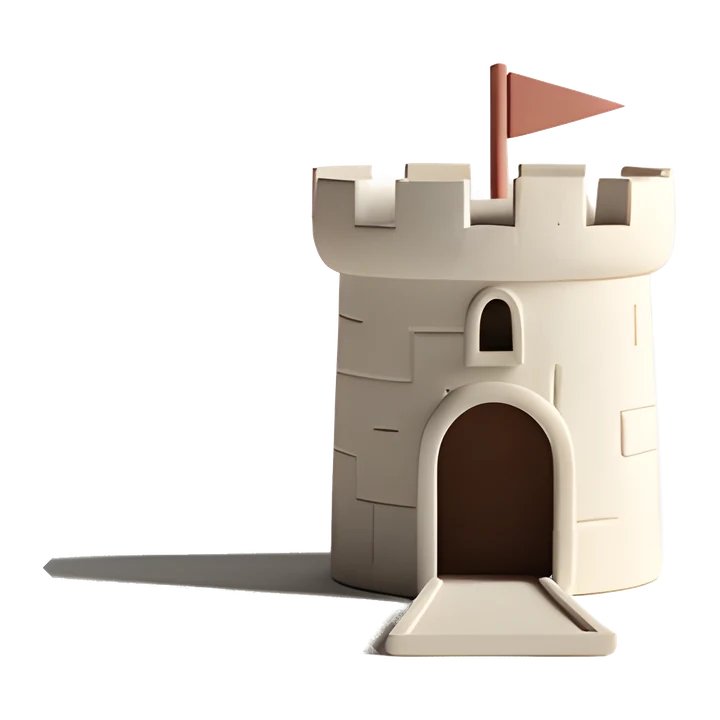
The Middle Ages are a time children have often met in games and fairy tales, but they really happened. There were castles, markets, knights and monks, and across Britain traces of that time are still standing in churches, city walls and old street plans. A book about the Middle Ages lets your child wander among the market stalls, help the blacksmith and climb a castle tower. It gives a feel for what life was like without electricity or cars, but with plenty of craftsmanship, music and storytelling.
A day at the castle and in town
A Middle Ages book can let your child help a blacksmith, unmask a cheat at the market or carry messages between the castle and the monastery when the drawbridge has already been raised for the night. Perhaps your child becomes a jester's apprentice, or follows a squire training for his first tournament. The events are made up, but the castle, the market and the monastery are taken from the period. If your child would rather have dragons with their knights, the theme knights and dragons is a good fit.
Which craft will your child choose?
Think about which craft your child would choose. A child who loves building can become the carpenter's apprentice, one who loves animals can look after the castle horses, and one who sings can travel with the minstrels. If you have visited a castle, a medieval fair or an old stone church, include it in your description. A brother or sister can be the squire, and Grandad can be the old watchman in the tower. The family pet can become the castle cat who keeps the rats out of the stores.
Small children enjoy pictures of horses, flags and towers. Children of nursery age love joining the market from morning till night. From six, a child can follow a little plot, like a saddle strap someone has cut. For ten-year-olds the book can show the difference between how knights lived and how life was for the peasants.
The wall that still stands
York is still ringed by walls from the Middle Ages, and you can walk along much of them today; they were built to protect the city. Many British churches also date from medieval times, so there may be one just round the corner. Afterwards you can build a castle from cardboard boxes, with a drawbridge you can raise with a piece of string. Talk about what it would be like to live without electricity: how do you cook, how do you see in the evening, what do you do when it rains? In the Middle Ages light came from tallow candles and the fire in the hearth.
Your child is the hero
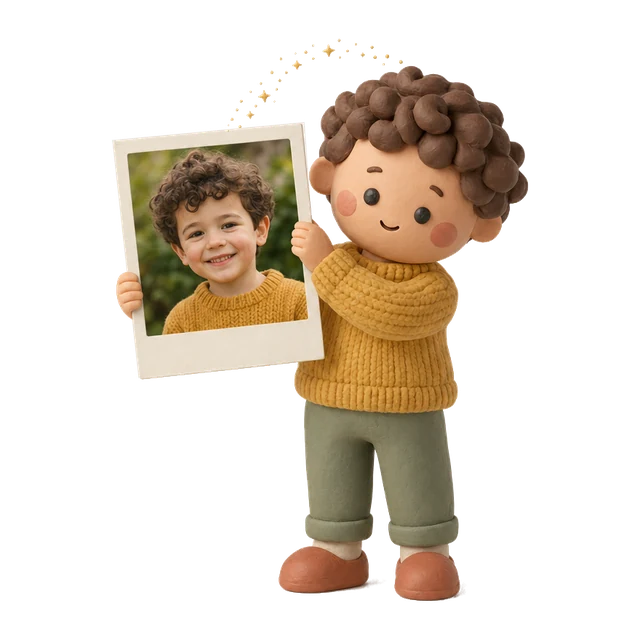
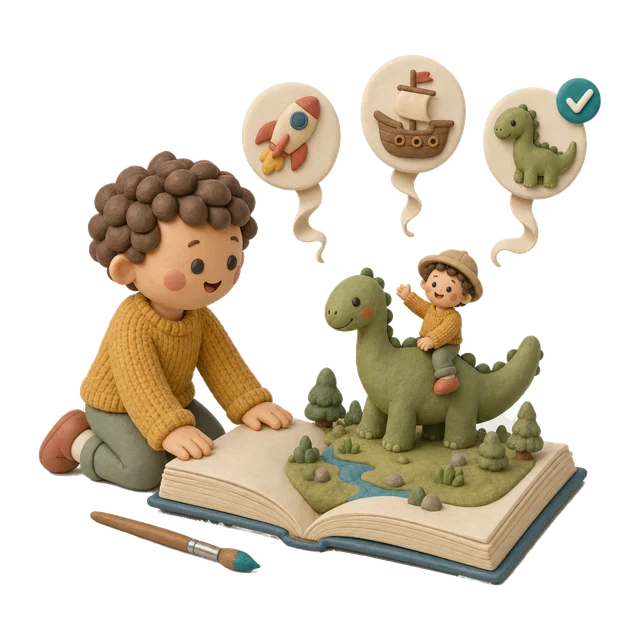
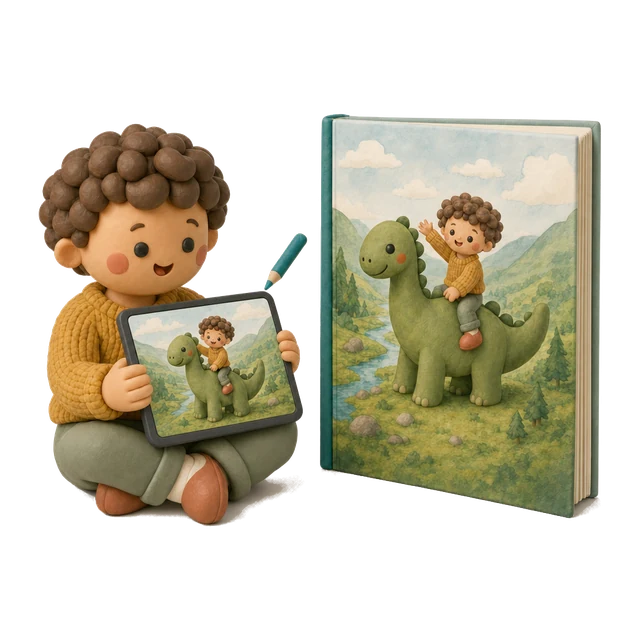
You fill in the child's name, age and what they like, and upload a photo. The story about the Middle Ages is written for your very own child, and the thirteen pictures and the cover are drawn from the photo in the style you choose. Brothers and sisters, parents, grandparents or the pet can come along, up to five characters. If you would like to include something that has happened lately, a trip or a lost tooth, just write it and it is woven in.
From eBook to hardback book
The eBook is ready a few minutes after payment. Read it, change the text and ask for new pictures until you are happy. Then order it as an A4 hardback book, printed and sent to your door, or straight to the child as a gift. Do add the audiobook or the colouring pages. Start creating the book or read more about the prices. Would you like to see a finished book before you decide? Browse our example books.
How the story could begin
It smells of smoke, horses and fresh bread. You're standing in the middle of the market square, and all around you people are calling out about wool, salt and herring. A man is juggling three apples and an egg, and when the egg nearly falls, everyone gasps. Further off, the blacksmith is hammering so hard the sparks fly. “You there,” he calls, waving. “Got strong arms? I need someone to work the bellows.” You go over and grab the handle. The fire hisses and turns white-hot. The blacksmith nods, pleased. Then he lowers his voice. “Tonight the lord's squire rides in his first tournament,” he whispers. “But someone has cut the strap on his saddle. I saw it. And I can't leave the forge.”
 Christmas
 Birthday
 Unicorns
 Dinosaurs
 Pirates
 Space
 Princes and princesses
 Fire brigade
 Sport
 Mermaids
 Superheroes
 Knights and dragons
 Construction vehicles
 Starting school
 A trip to the farm
 Jungle
 Fairies
 Treasure hunt
 Underwater
 A new baby
 Brushing teeth
 Confidence
 Bedtime story
 The enchanted forest
 Witches and spells
 Giants
 Gnomes
 Wizard school
 Camping
 Time travel
 Haunted house
 Police
 Racing
 Aeroplanes
 Secret mission
 The zoo
 Dressing up
 Building a tree house
 The amusement park
 A train journey
 A visit to the doctor
 The dentist
 The library
 The beach
 The forest
 Baking
 Music
 Dance
 Ancient Egypt
 The Stone Age
 The Vikings
 In the future
 The Middle Ages
 Candy land
 At the North Pole
 The savannah
 Easter
 Halloween
 Lucia
 Midsummer
 New Year
 Name day
 Eid
 Hanukkah
 Becoming a big brother or sister
 Father's Day
 Mother's Day
 Grandparents
 A new pet
 Moving house
 Sleepovers
 A wedding
 Holiday
 Learning to ride a bike
 Giving up the dummy
 Potty training
 Tidying up
 Eating well
 Learning to tell the time
 Learning to count
 The alphabet
 Seasons and weather
 Afraid of the dark
 Tantrums
 Feeling homesick
 Being teased
 Jealousy
 Feeling proud
 Handling big feelings
 Funny story
 Olivia
 Muhammad