Why the theme The savannah makes a good book
An adventure that suits the child
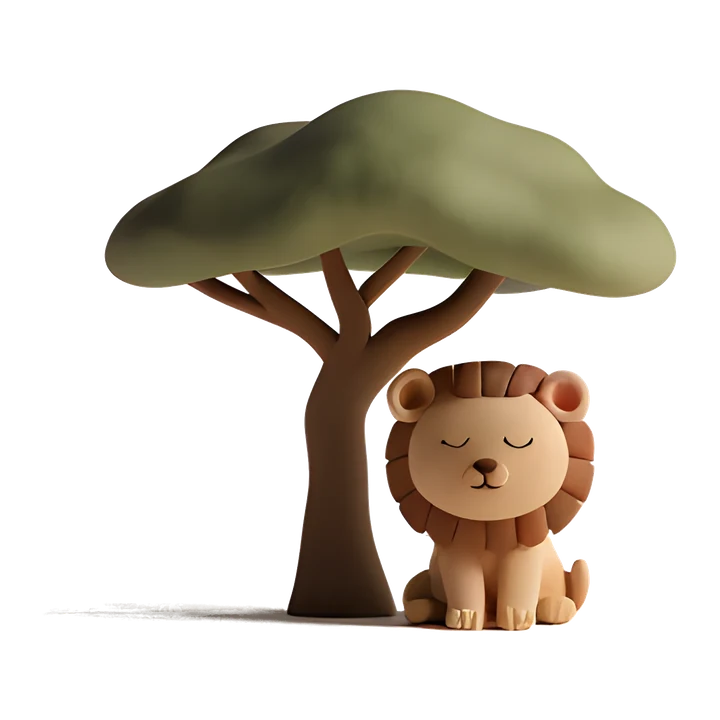
The savannah is the land of the big animals. Lions, giraffes, elephants and zebras – many of the animals children first meet in board books live right here. A book about the savannah lets your child see them up close, in their own grass and at their own waterhole. The open landscape leaves room for long treks and wide views. And there's a great deal to discover in how the animals live together: who keeps watch, who shares, who needs help when the drought comes.
At the waterhole and beyond
On the savannah your child can walk with a herd of elephants towards water, help a baby giraffe find the courage to drink for the first time or count zebras from a hot-air balloon. Perhaps the rain arrives after a long drought, and the whole savannah wakes up. Your child can sit with meerkats keeping watch on a termite mound, or track a lion through the dust without the lion noticing. On another evening your child sleeps in a tent, hears lions roaring far away and tries to guess which other animals are awake.
The animal that comes all the way
Ask which animal your child likes best. Is it the lion, the hippo or the little gazelle? That animal can be your child's companion through the whole book. If you've seen giraffes at a zoo, or your child has a cuddly elephant, mention it. A brother or sister can be the photographer with a camera round their neck, and a grandad who always knows the way can be the one driving the truck. If you've made a long journey together, it can become the journey to the savannah.
Small children enjoy recognising the animals and hearing the sounds they make. Between three and five, a whole day on the savannah fits well, from dawn to sunset. School-age children can have a story with a drought or a poacher to be stopped, and ten-year-olds have the stamina for a longer trek where the animals must work together to survive.
The giraffe's long neck
A giraffe has the same number of neck bones as a human: seven. The difference is that the giraffe's are much longer. Measure your child's neck with a tape measure and wonder together how long it would be if it were like a giraffe's. Then make the sounds of the savannah together: the elephant's trumpet, the lion's roar and the hyena's giggle. Talk about which animals eat grass and which eat other animals, and about why zebras have stripes – nobody knows for certain, and there are several ideas to think about.
Your child is the hero
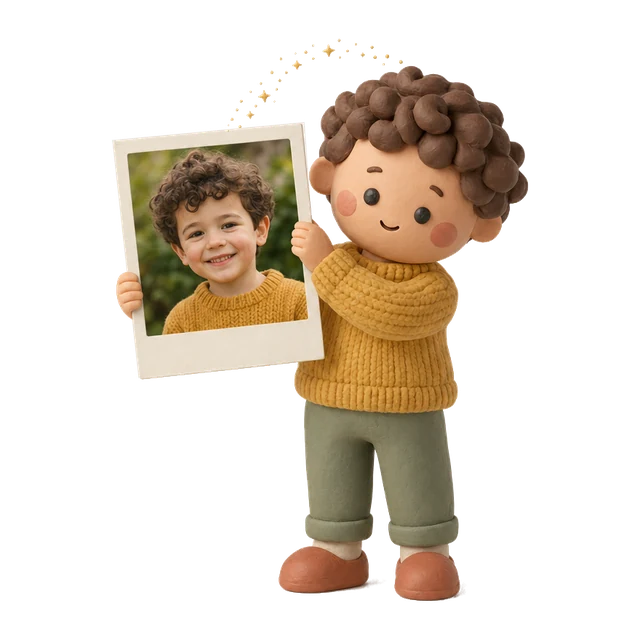
You fill in the child's name, age and what they like, and upload a photo. The story about the savannah is written for your very own child, and the thirteen pictures and the cover are drawn from the photo in the style you choose. Brothers and sisters, parents, grandparents or the pet can come along, up to five characters. If you would like to include something that has happened lately, a trip or a lost tooth, just write it and it is woven in.
From eBook to hardback book
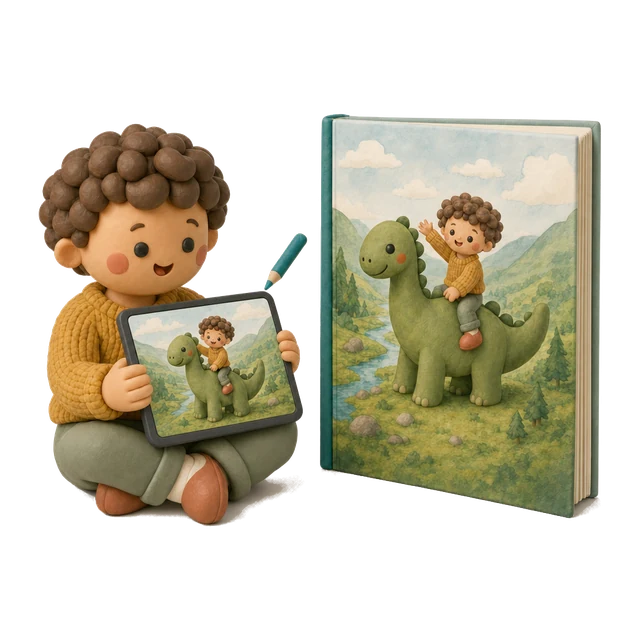
The eBook is ready a few minutes after payment. Read it, change the text and ask for new pictures until you are happy. Then order it as an A4 hardback book, printed and sent to your door, or straight to the child as a gift. Do add the audiobook or the colouring pages. Start creating the book or read more about the prices. Would you like to see a finished book before you decide? Browse our example books.
How the story could begin
The grass is so tall it comes up to your shoulders, and it's yellow and dry and whispers when the wind runs through it. You're sitting on top of a safari truck with a water bottle in your hand. The driver has switched off the engine. It's completely silent, apart from the crickets. Then something moves among the stalks, a little to the left. A pair of ears. A tail with a tuft on the end. A lioness steps out, followed by three cubs tripping over each other. She looks at the truck for a long time and doesn't seem to mind. But one of the cubs stays behind. It sits down and looks straight at you. Then it turns its gaze to the horizon, where the sky has turned dark grey and a rumble can be heard far away. “The rain is coming,” says the driver softly. “It hasn't rained here for months.”
 Christmas
 Birthday
 Unicorns
 Dinosaurs
 Pirates
 Space
 Princes and princesses
 Fire brigade
 Sport
 Mermaids
 Superheroes
 Knights and dragons
 Construction vehicles
 Starting school
 A trip to the farm
 Jungle
 Fairies
 Treasure hunt
 Underwater
 A new baby
 Brushing teeth
 Confidence
 Bedtime story
 The enchanted forest
 Witches and spells
 Giants
 Gnomes
 Wizard school
 Camping
 Time travel
 Haunted house
 Police
 Racing
 Aeroplanes
 Secret mission
 The zoo
 Dressing up
 Building a tree house
 The amusement park
 A train journey
 A visit to the doctor
 The dentist
 The library
 The beach
 The forest
 Baking
 Music
 Dance
 Ancient Egypt
 The Stone Age
 The Vikings
 In the future
 The Middle Ages
 Candy land
 At the North Pole
 The savannah
 Easter
 Halloween
 Lucia
 Midsummer
 New Year
 Name day
 Eid
 Hanukkah
 Becoming a big brother or sister
 Father's Day
 Mother's Day
 Grandparents
 A new pet
 Moving house
 Sleepovers
 A wedding
 Holiday
 Learning to ride a bike
 Giving up the dummy
 Potty training
 Tidying up
 Eating well
 Learning to tell the time
 Learning to count
 The alphabet
 Seasons and weather
 Afraid of the dark
 Tantrums
 Feeling homesick
 Being teased
 Jealousy
 Feeling proud
 Handling big feelings
 Funny story
 Olivia
 Muhammad